Home › Commercial Retaining Walls
We construct commercial masonry retaining walls in Seattle, WA to manage grade changes on sites, lots, and plazas. Our team follows engineered plans, including reinforcement, drainage, and protective coatings. Choose a retaining wall contractor that understands both performance and appearance requirements.
Superior Masonry Seattle provides professional commercial masonry retaining walls throughout Seattle, WA, Washington and the surrounding area. Our licensed, insured crew delivers safe, clean, on-time work with a free estimate before anything begins. Call (425) 270-2577 or request your free quote.
Commercial Retaining Walls Built for Seattle Conditions
Commercial masonry retaining walls in Seattle have to do more than hold back dirt. They deal with year-round moisture, steep grades, tree roots, heavy traffic, and strict local codes. At Superior Masonry Seattle, we design and build retaining systems that take all of that into account from the start.
Most of our commercial retaining wall projects begin with a site walk and a grade review. We look at slope, drainage paths, nearby structures, existing utilities, and soil type. In Seattle, we frequently see glacial till, fill from older construction, and pockets of soft, saturated soil. Each type behaves differently under load, so we factor that into the wall height, footing depth, and reinforcement.
We work with property managers, general contractors, and engineers to match the wall to its use. A wall holding up a parking lot or driveway needs different design considerations than a wall that creates a planting terrace or screens a loading area. By clarifying intended use and future load early, we avoid expensive changes later and build a retaining wall that actually suits day-to-day operations on your site.
Design, Engineering, and Permitting for Commercial Walls
In Seattle, commercial masonry retaining walls above certain heights or supporting vehicle loads usually require engineering and permits. Superior Masonry Seattle can coordinate with your civil or structural engineer, or we can refer you to engineers we regularly work with. We provide field measurements, soil exposure details, and constructability notes so the design on paper matches what can actually be built on the ground.
A complete design package typically includes wall layout and height, footing dimensions, drainage design, reinforcement schedule, and facing material. For many commercial projects, we also plan access for maintenance crews, guardrails or fencing at the top of the wall, and coordination with adjacent flatwork or stairs. We pay close attention to transitions where a retaining wall meets a building foundation or another wall, because these are common points of cracking or water intrusion if not detailed well.
On the permitting side, we are familiar with Seattle Department of Construction and Inspections expectations for retaining structures, including survey requirements, setbacks, and erosion control. We help you plan the work so inspections line up with pour days, footing excavation, and drainage installation. That reduces downtime on active commercial sites and keeps the schedule realistic during Seattle’s rainy seasons.
Materials, Construction Methods, and Drainage That Actually Work Here
For commercial masonry retaining walls, we typically work with three main systems: reinforced concrete with masonry facing, segmental block retaining walls rated for commercial loads, and fully reinforced concrete walls where space is tight or loads are very high.
Reinforced concrete with a brick or stone veneer is common around offices, retail fronts, and public spaces where appearance matters. We form and pour a structurally sound concrete wall, then install a masonry veneer that ties mechanically to the structure. This lets you match existing building brick or create a specific architectural look while keeping structure and appearance separate for easier maintenance.
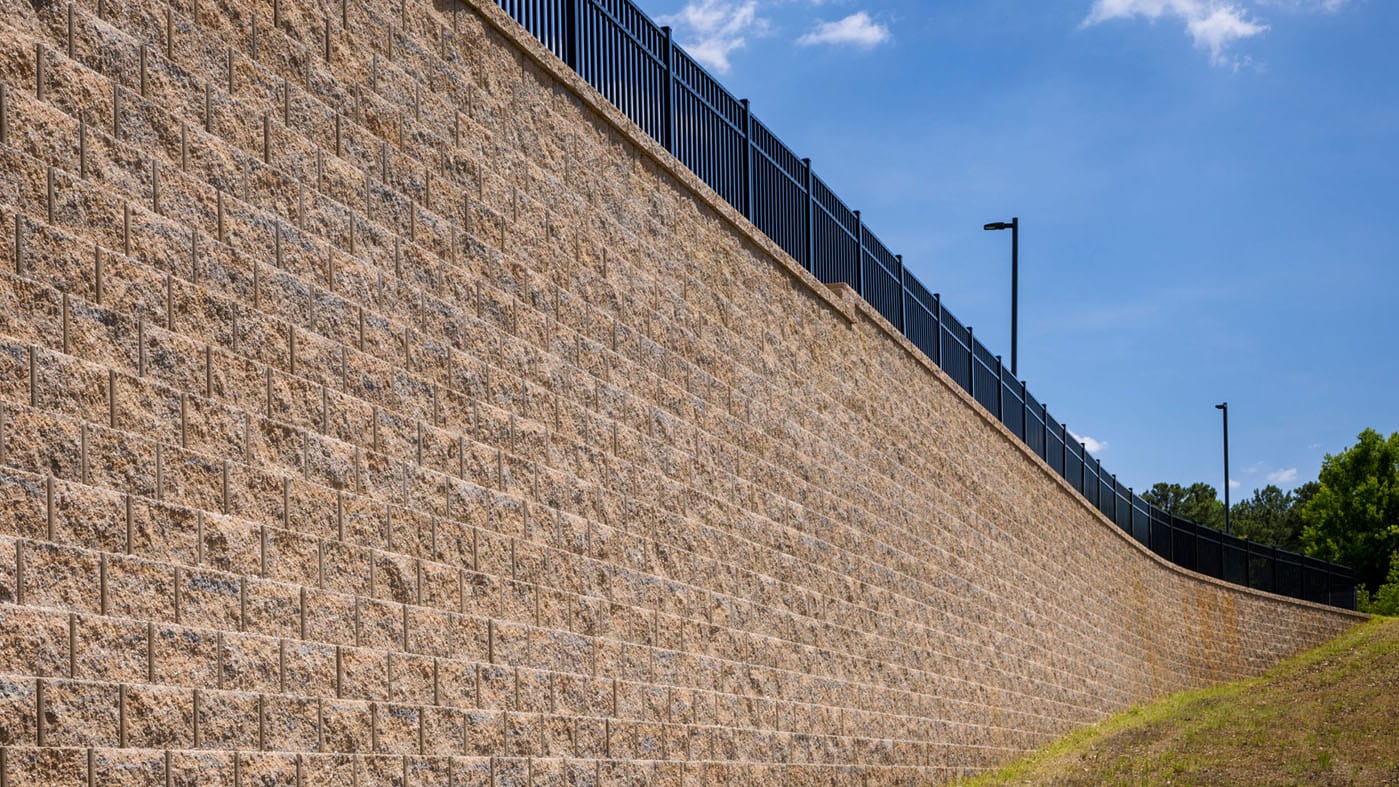
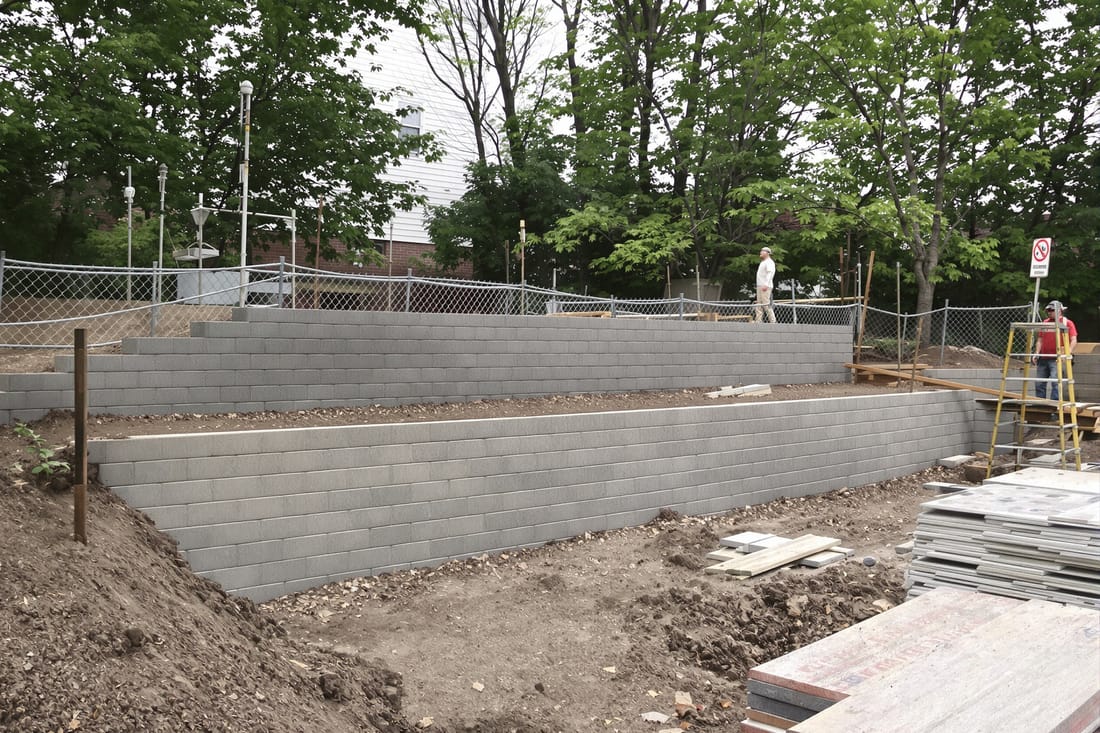
Segmental retaining walls made from engineered concrete blocks are a good fit for parking lots, drive aisles, and sloped property boundaries. These systems lock together and often use geogrid reinforcement that extends back into the soil. For commercial use, we only install block systems that have proper engineering data and comply with local code, especially where trucks or fire apparatus may be nearby.
Regardless of the wall type, drainage is critical in Seattle’s climate. Behind every commercial retaining wall we install a drainage zone of washed gravel, perforated drain pipe with cleanouts, and filter fabric to separate the drainage materials from native soils. This setup relieves hydrostatic pressure and helps prevent frost heave in colder snaps. We also plan for where that water goes, tying into existing storm systems where allowed or daylighting the drain in a controlled location. Skipping or skimping on drainage is one of the main reasons older walls around the city lean or fail, so we do not treat it as optional.
Cost Drivers, Scheduling, and How We Work Around Active Sites
The cost of commercial masonry retaining walls in Seattle is driven mainly by wall height and length, wall type, site access, and soil conditions. Taller walls require deeper footings, more reinforcement, and more engineering. If access is tight and we cannot bring in full-size excavators or material trucks, labor time goes up. Poor or saturated soils can require over-excavation and replacement with compacted structural fill.
During our estimating process, Superior Masonry Seattle will itemize major components like excavation, base and footing work, drainage, masonry or block installation, and any guardrail or fencing coordination. Where soils are uncertain, we typically include allowances or recommend a geotechnical review so you are not surprised by change orders later.
Scheduling is always tied to weather and site use. Seattle’s wet months make excavation and concrete work more sensitive, so we plan footing pours and backfilling around the forecast whenever possible. On active commercial sites, like operating businesses or multi-tenant properties, we stage the work in sections, maintain safe pedestrian routes, and limit closure of parking or drive lanes to defined windows. Dust control, noise, and debris removal are part of our daily planning so your tenants or customers can keep using the property while the new wall goes in.
We also plan for temporary shoring or slope protection if your existing wall is failing and close to a public area. Stabilizing a compromised wall safely before replacement can be as important as the new wall itself.
Repair, Replacement, and What to Watch for on Existing Walls
Many of our commercial retaining wall projects in Seattle involve replacing or extending older walls that were not designed for current loads or that were built without proper drainage. Before recommending full replacement, Superior Masonry Seattle looks at what can be repaired and what cannot.
Warning signs that a commercial retaining wall needs attention include bulging or bowing sections, stepped or wide cracks, rust staining from rebar corrosion, drainage water seeping or pouring through singular joints, and significant leaning. In parking areas, you may also notice pavement cracking or sinking near the top of the wall. These issues usually mean the wall is overloaded or water pressure is building behind it.
Sometimes we can stabilize a wall by improving drainage, adding tie-backs or soil nails in coordination with an engineer, or reconstructing specific sections. In other cases, especially where blocks have shifted or footing support has been lost, full replacement is the safer long term solution. When replacement is needed, we plan phasing so that the slope or supported area is never left in an unsafe condition overnight.
If you are planning a new development or expansion, it is also smart to review how any new retaining work will interact with existing walls. We can evaluate the existing structures and design transitions, step-downs, or connection details that avoid creating weak points or odd drainage paths. Addressing these details during planning instead of after the fact tends to save both time and money.